Programs scaled
20+
Active premium membership programs across spirits, hospitality, and lifestyle.
Led design and architecture across brand, member experience, member-facing products, and the operational backbone that connects them. Built and scaled at AnyRoad, now powering 20+ premium membership programs.
Most loyalty programs are transactional, cookie-cutter, and easily forgotten. Stamps. Points. Tier badges that nobody cares about. Meanwhile, the brands that earn the deepest customer relationships are the ones that treat membership like a story their fans want to be part of, with tactile artifacts, real access, and a sense of belonging that punches above the price.
The opportunity at AnyRoad was to build the design and operational layer that makes premium, story-driven membership repeatable. Not a templated SaaS feature, but a system flexible enough to launch a national heritage spirits program one quarter and a boutique craft society the next, without losing the soul of either.
"Loyalty isn't bought, it's felt. The system has to make that feeling repeatable."
Year one was custom builds, every program rebuilt from scratch. By year two, we'd separated the brand layer from the operational backbone. The result was faster launches, premium individuality preserved, and an actual design system instead of a library of one-offs.
Each program rebuilt the wheel: bespoke flows, ad-hoc components, isolated brand expressions, redundant ops. Slow, expensive, inconsistent.
A modular system underneath, with the brand layer customized on top. Repeatable launches. Consistent member experience. Operational leverage.
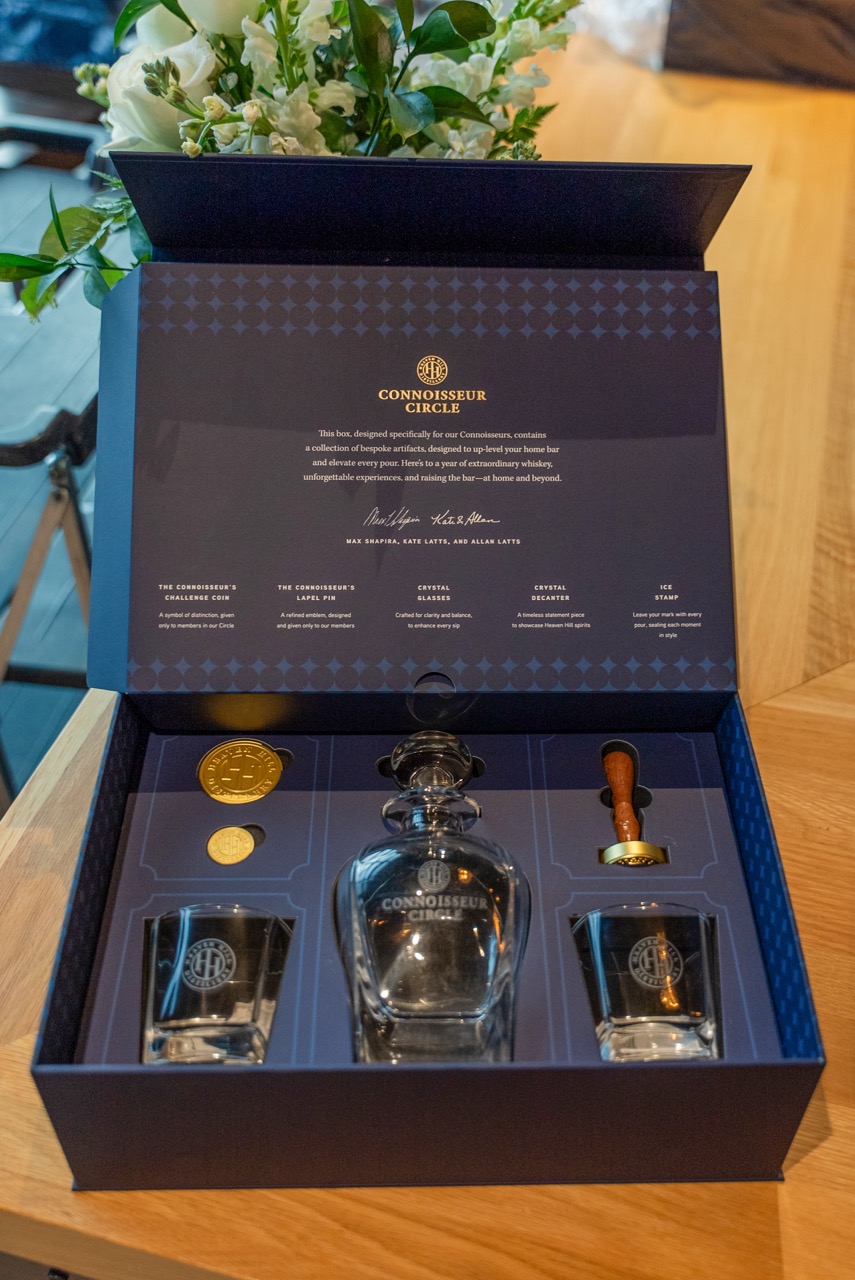
The single most important design decision was deciding what stays brand-specific (identity, voice, the tactile welcome kit) and what becomes system-shared (enrollment, dashboards, member IDs, ops). That separation is the reason 20+ programs run on a coherent backbone instead of separate codebases and design files.
Every program runs on these eight surfaces. The brand layer sits on top; the operational backbone runs underneath. Each component is designed to be reusable, themeable, and operationally lean.
Naming, brand mark, positioning, visual identity, voice, and copy for each membership.
Custom Webflow + Memberstack + Prefinery logic for forms, plans, invites, and automation.
Design and vendor ops for premium welcome kits, quarterly bottle shipments, and ongoing benefits.
CMS-powered member home: RSVP systems, referral tools, benefit tracking, and concierge entry points.
Custom code to generate, store, and validate referral codes, tracked in real time across programs.
Brand-themed Apple Wallet and Android passes. Member name, ID, and plan visible at a glance. Auto-issued on enrollment, auto-revoked on cancellation.
On-site activations, private tastings, custom RSVP flows, and surprise-and-delight moments.
Behind-the-scenes systems for member comms, shipping ops, retention workflows, and concierge service.
Out of 20+ programs, these three show how the same system supports programs at different tiers (different price points, different cadences, different member audiences) without rebuilding the platform underneath. Same system underneath; scope flexes to the tier.
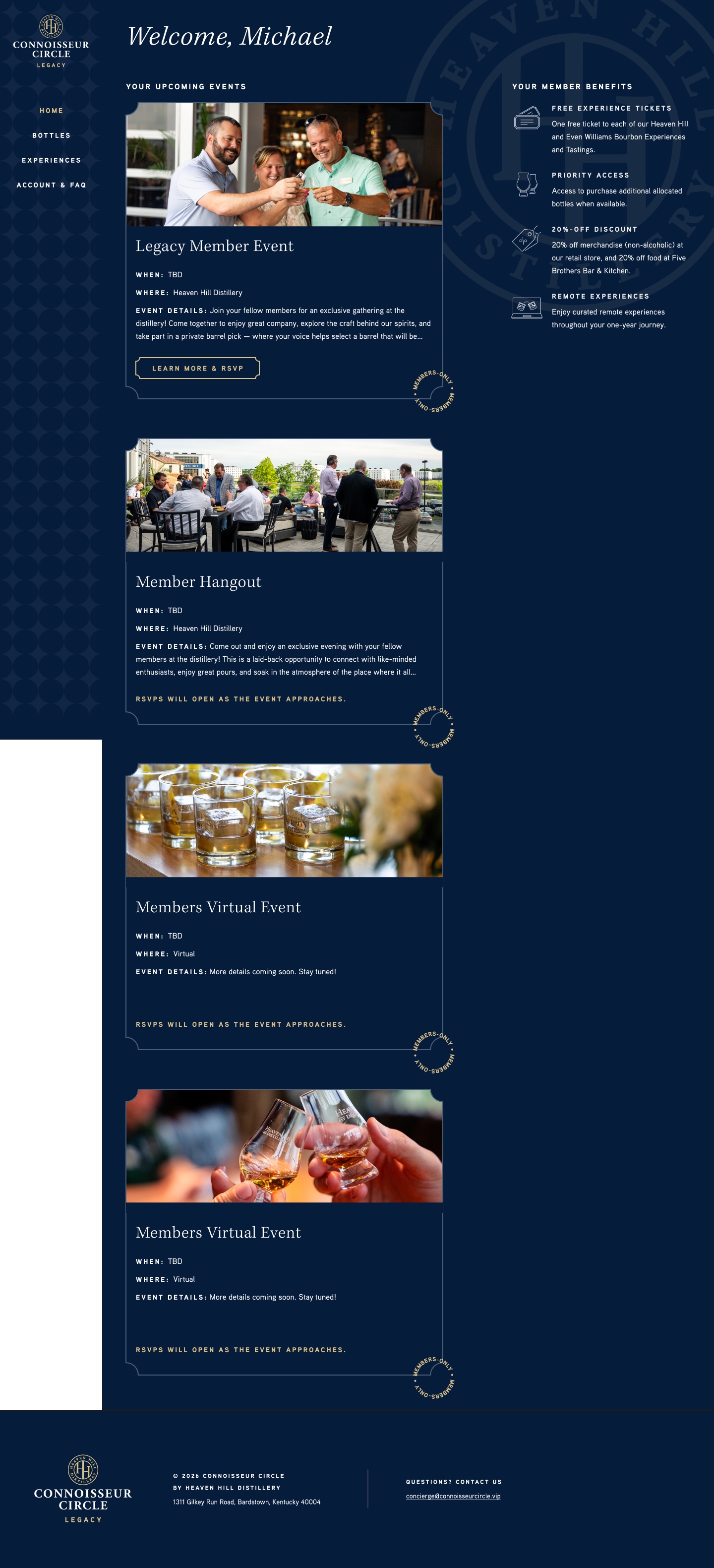
Heaven Hill is one of the largest independent family-owned distilleries in the country. Connoisseur Circle needed to feel as serious as the brand, with the operational depth to match the scale of national distribution.
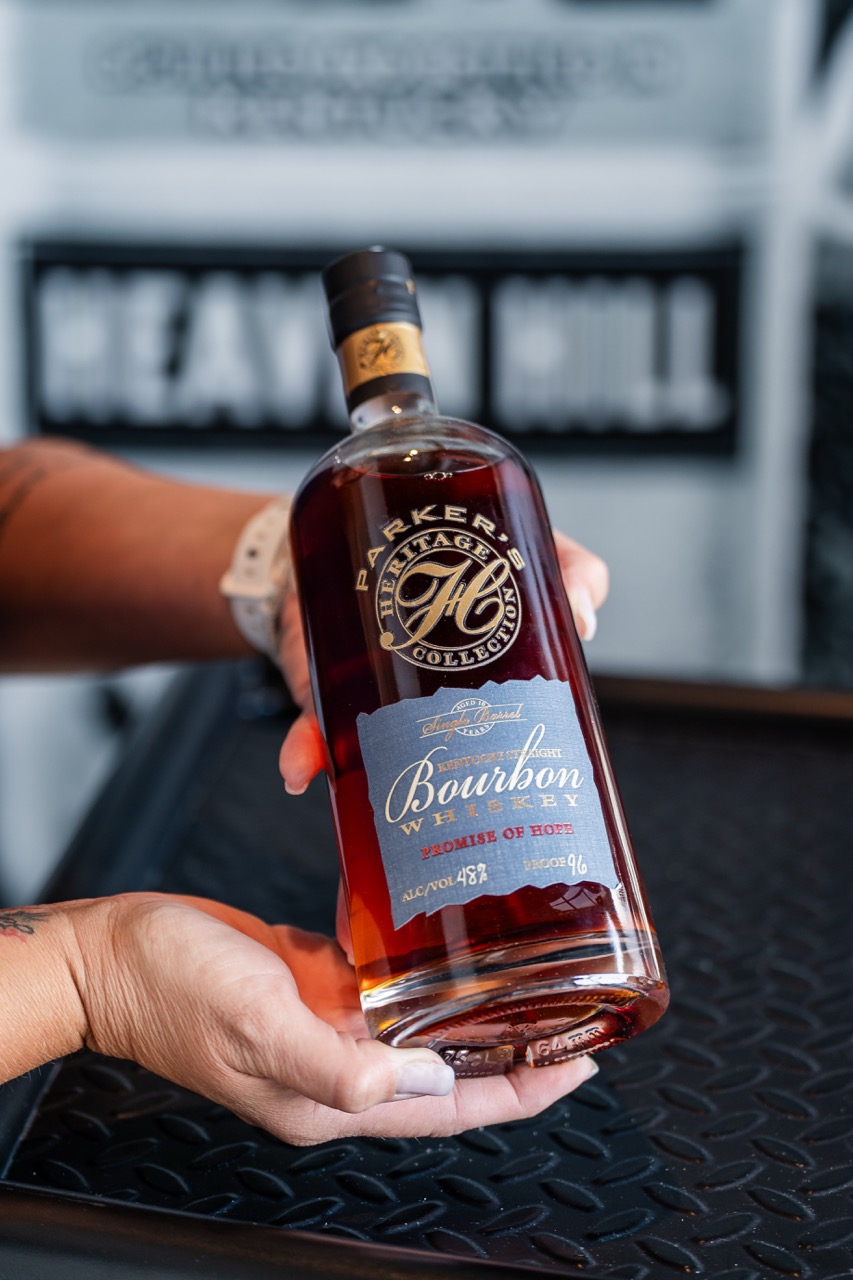
The system shipped the full stack: brand identity, member application and onboarding, welcome experience, member portal, allocated quarterly releases, digital ID, event access, and the ops backbone behind it. Same scope as the other two programs; the brand layer carried the heritage execution.

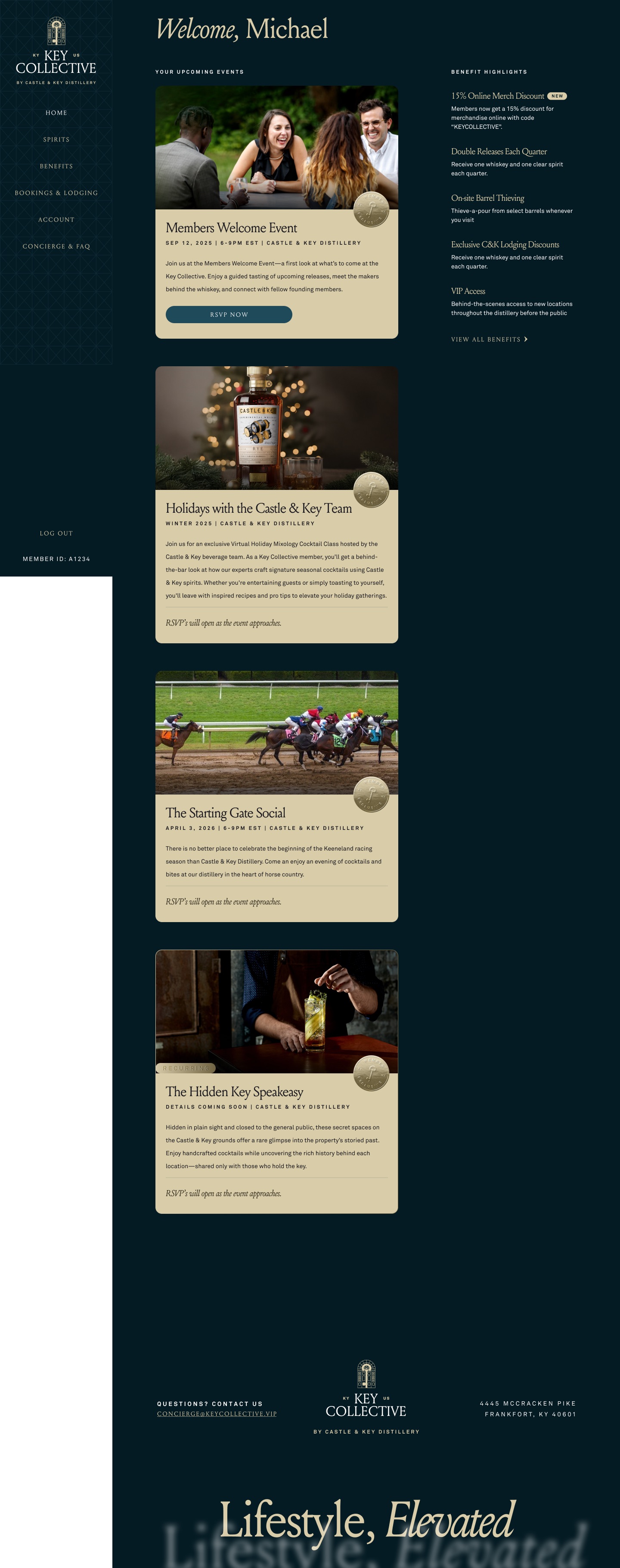
Castle & Key is one of Kentucky's most beautiful distilleries: a restored historic estate with a craft bourbon program and a clientele that expects hand-finished detail. The membership had to feel boutique, not platform.
Same backbone as Heaven Hill, completely different soul. The brand layer carried the craft execution: wax-sealed welcome letters, embossed coasters, custom packaging, and a member experience that reads as bespoke. The system handled enrollment, dashboard, IDs, and ops; the brand layer handled the feel.

MADE SOUTH is the art of being Southern, a lifestyle brand celebrating the craftsmanship, hospitality, and culture of the American South. The Gracious Plenty Society is their premium membership: exclusive, roving quarterly events connecting discerning Southerners with Southern makers, artists, and creators.
The work started with naming. A brief that called for something distinctively Southern, epicurean, and discerning. "A gracious plenty" emerged as a phrase Southerners instantly recognize. From there: logo and brand identity, a physical invitation program, and a digital customer journey. A different category, a different audience, a different cadence. And the proof that the system isn't a spirits playbook.
The story above is the why and the what. These are the how. Each spotlight lives on its own page and goes deeper into a single surface where the system has to do real, constrained design work.
A digital wallet pass plus a staff-side scanner that turns one QR into check-ins, pour redemptions, and bottle pickups. Auto-issued on enrollment, auto-revoked on cancellation. Replaced manual paper pickup lists across every brand.
The application flow that turns interest into paid membership: invite-only mechanics, referral codes, waitlists, and Stripe + Memberstack tier logic working as one acquisition system.
The CMS-powered member dashboard pattern: RSVPs, referral tools, benefit tracking, allocated releases, and concierge entry points, designed once and themed across 20+ brands.
"When the first program launched, the concierge inbox filled with thank-you notes. Not for the bourbon. For being invited to join the journey."
The full roster of brands and societies this work has shipped for. Most run the full membership program; some run a minimized bottle-club framework on the same system underneath.










The hard part of premium loyalty isn't the visual identity or even the product. It's the operational backbone. Members can feel the difference between a program that runs on a system and one that runs on heroics. The design work that mattered most was the work that made operations invisible.
The other lesson was about the brand layer. Premium brands won't accept a templated experience, no matter how efficient it is. The system has to feel custom even when it isn't. That's a design problem, not a product problem, and it lives in the small details: the welcome moment, the voice of the concierge, the texture of the kit.
Three next moves are all on the table. First, productize the Lifetime Loyalty platform itself as a SaaS layer that brand teams can self-serve into, turning what's currently a managed-service offering into a product. Second, expand into adjacent verticals beyond spirits (hospitality, sports, culture) where the same operational backbone applies to entirely new program categories. Third, move members from brand-by-brand portals into a single member-facing app that holds every program they belong to, making the ecosystem visible to the people inside it.
Each of these takes the same backbone that's been built and pushes it in a different direction. The work that's shipped is the foundation; the next stage is what gets built on top.